Editor’s note: This is an educational explainer about how Australia’s continuous disclosure regime generally works. It is general information, not investment advice, and does not describe any specific current event, company, or security.
A listed company’s board can discover devastating news on a Tuesday afternoon and, under Australian law, may already be obliged to tell the entire market before that day’s trading even ends. There is no waiting for the next quarterly report, no grace period to “get the story straight” with lawyers and advisers first. The clock, in many cases, starts running the moment someone inside the company becomes aware of the information. Understanding why that clock exists, and what actually triggers it, explains one of the more demanding investor-protection regimes in global markets.
The legal backbone: Listing Rule 3.1
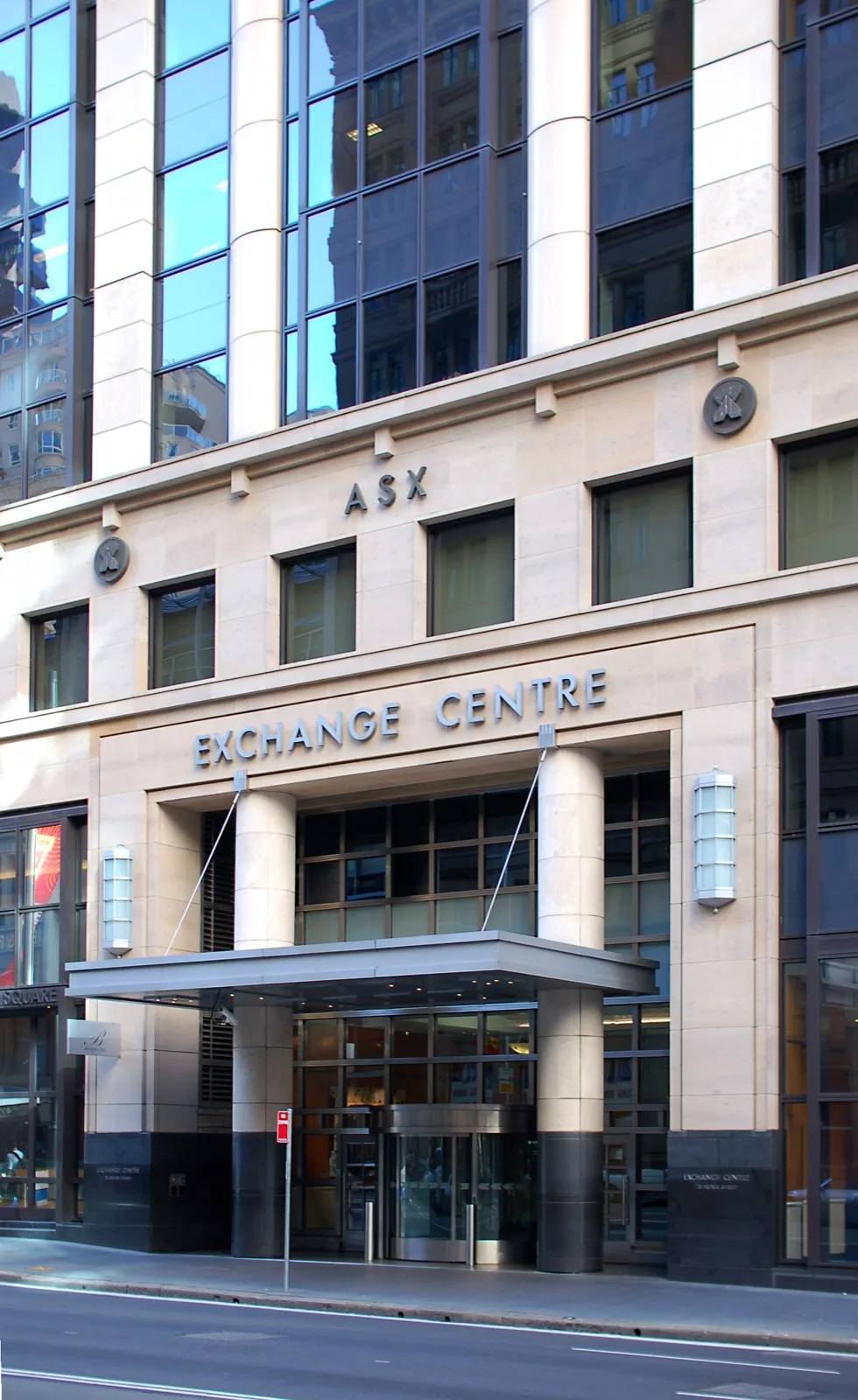
Australia’s continuous disclosure regime sits at the intersection of two sources of law. The Australian Securities Exchange (ASX) imposes Listing Rule 3.1 as a condition of being listed at all, while the Corporations Act gives that obligation statutory teeth, including civil penalties. The core rule is short: once an entity becomes aware of information that a reasonable person would expect to have a material effect on the price or value of its securities, it must immediately tell the ASX, which then releases it to the market.
“Immediately” has been interpreted by ASX guidance to mean promptly and without delay, not “by the end of the week” or “once the board has met.” In practice, companies build internal escalation processes precisely because the obligation attaches as soon as any officer or employee whose duties would reasonably lead them to know the information becomes aware of it, not only when the board formally convenes. That is a deliberately low bar, designed to stop information from sitting inside a company while its executives decide how best to manage the narrative.
What actually counts as “material”
The materiality test is genuinely one of the harder judgment calls in Australian corporate life, because it is deliberately open-ended rather than a fixed checklist. Regulatory guidance frames it as information a reasonable person would expect to influence people who commonly invest in securities when deciding whether to buy, sell, or hold. That reasonable-investor standard means a piece of news can be material even if a company’s own management does not think it particularly significant, and even if no precise dollar figure can yet be attached to it.
Certain categories recur in ASX guidance as commonly material: earnings materially different from market expectations, changes to the makeup of the board or senior management, a significant transaction such as an acquisition or asset sale, credit rating changes, regulatory investigations or major litigation, and the loss or gain of a major contract. Crucially, materiality is not solely about size in absolute terms. A development that would be immaterial for a large, diversified company can be highly material for a smaller one where it represents a substantial share of revenue or asset value. The test also captures information that is negative as readily as information that is positive: continuous disclosure is not just an “announce your wins” regime.
The carve-outs, and why they are narrow
The rules do allow limited exceptions, generally where a matter is confidential, a reasonable person would not expect it to be disclosed, and one of several specific conditions applies, such as the information concerning an incomplete proposal or negotiation, comprising matters of supply that would breach a legal duty if disclosed, or relating to a company still working through the practical detail of implementing a decision already made. Even here, the exception evaporates the moment confidentiality is lost or the market forms a view based on rumour, at which point the company may need to make an announcement anyway to correct the record.
This narrowness is deliberate. Regulators in Australia, as in most developed markets, worry that generous exceptions become a shield companies use to delay unwelcome news. The Australian Securities and Investments Commission (ASIC) has pursued enforcement action over continuous disclosure breaches often enough that the obligation is treated by listed companies not as a background compliance formality but as a live operational risk, with trading halts frequently used as a circuit-breaker: a company that realises it cannot yet finalise a compliant announcement can ask the ASX to pause trading in its securities rather than let the market trade on incomplete information.
Why the regime exists at all
The underlying logic is straightforward market economics. Share prices are only as reliable as the information available to everyone trading them. If material facts can sit inside a boardroom indefinitely, insiders trade on an informational edge that outside shareholders never get to see, and the broader market loses confidence that prices reflect real conditions. Continuous disclosure is Australia’s mechanism for forcing that informational gap closed as quickly as practicable, treating timely, symmetrical information not as a courtesy to investors but as a structural precondition for a fair and efficient market.